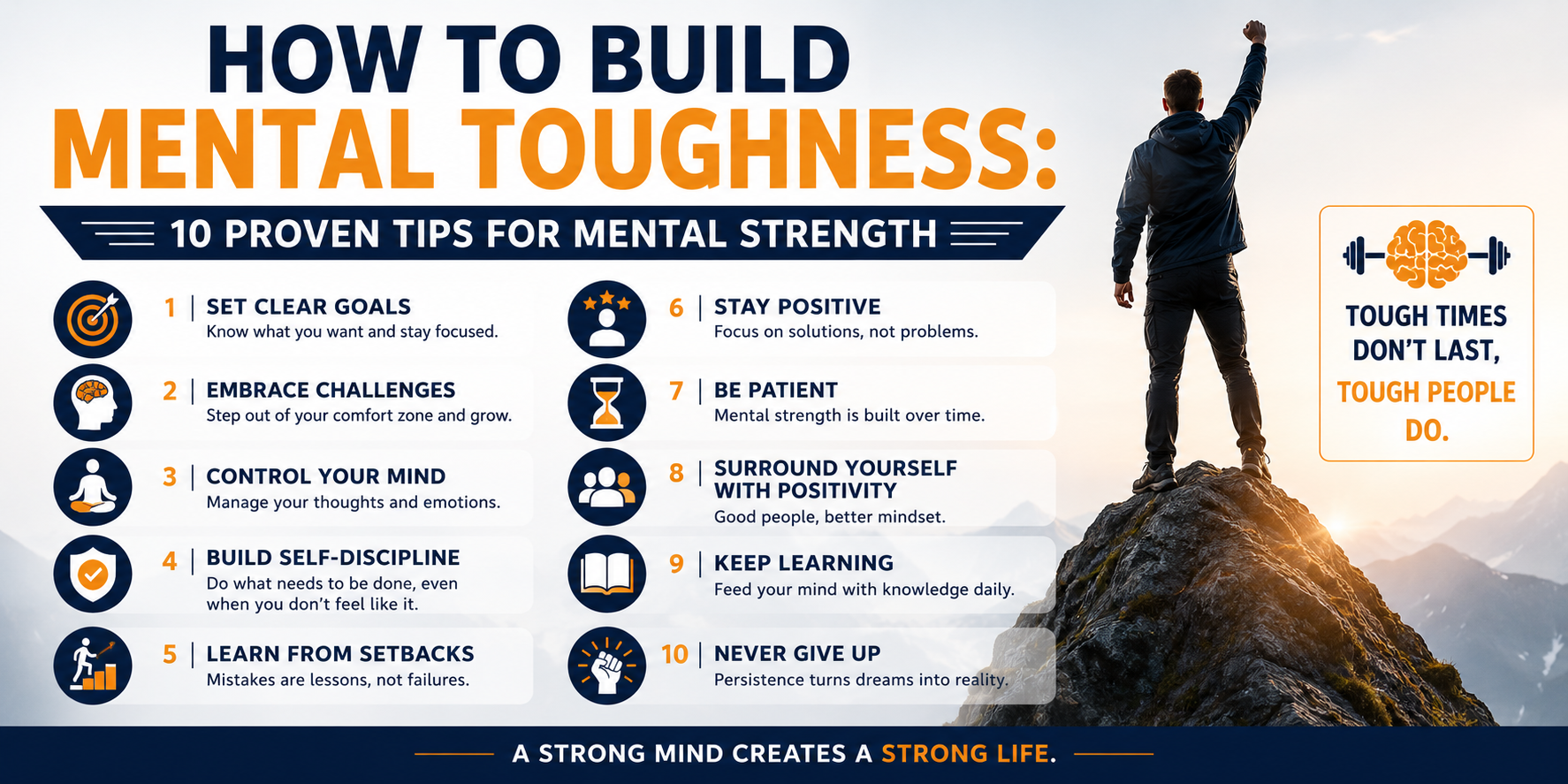
Mental toughness is the cornerstone of success, resilience, and personal growth. It's not just about enduring hardships but thriving amidst them. If you've ever wondered how to be mentally strong, how to increase mental strength, or how to improve mental strength, you're in the right place. In this blog, we'll explore 10 proven tips to help you build unshakable mental resilience and become the best version of yourself.
Why Mental Toughness Matters
Mental toughness is the secret sauce to overcoming challenges, staying focused on goals, and bouncing back from setbacks. Without it, we risk falling into cycles of self-doubt, fear, and procrastination. Struggles are inevitable in life, but what truly defines us is how we respond to these challenges.
Many people feel overwhelmed, anxious, or stuck because they lack the mental resilience to break free from negative emotions. This can affect not only personal well-being but also relationships, career success, and overall life satisfaction. Learning how to become mentally strong is essential for navigating life's ups and downs with grace and confidence.
The Consequences of Weak Mental Strength
- Procrastination and Fear of Failure: Avoiding challenges due to fear of failing.
- Low Self-Esteem: Struggling with self-doubt and negative self-talk.
- Relationship Struggles: Difficulty setting boundaries or asserting oneself.
- Emotional Instability: Easily overwhelmed by stress, anxiety, or setbacks.
The good news? Mental toughness isn’t an innate trait—it can be developed with the right strategies.
10 Proven Tips for Building Mental Strength
1. Reframe Negative Thoughts
Our thoughts shape our reality. By learning to reframe negative thoughts, we can shift from a victim mindset to one of growth and opportunity. Instead of thinking, "I'm a failure," try, "This is a setback, but it's an opportunity to learn and grow." This simple shift can have a profound impact on your mental toughness.
2. Focus on the Present Moment
Worrying about the future or dwelling on the past drains mental energy. Practicing mindfulness helps anchor your mind in the present, reducing anxiety and increasing clarity. Being fully present allows you to respond thoughtfully rather than react impulsively.
3. Practice Self-Compassion
Be kind to yourself, especially when things go wrong. Self-compassion fosters resilience by helping you treat mistakes as learning opportunities instead of failures. This mindset promotes growth and reduces the fear of trying new things.
4. Set Small, Achievable Goals
Big goals can feel overwhelming. Break them down into smaller, manageable tasks. Achieving these micro-goals builds confidence and creates momentum, making it easier to tackle bigger challenges over time.
5. Practice Mindfulness
Mindfulness isn't just a buzzword—it's a powerful tool for mental resilience. Regular mindfulness practices, like meditation or mindful breathing, improve focus, reduce stress, and enhance emotional regulation, all crucial components of mental toughness.
6. Develop a Growth Mindset
Believing that your abilities can improve with effort is the foundation of a growth mindset. Embrace challenges as opportunities to learn rather than threats to your competence. This shift in perspective fosters perseverance and resilience.
7. Build a Support Network
Surround yourself with positive, supportive people who encourage growth and resilience. A strong support system provides motivation, accountability, and perspective during tough times.
8. Practice Gratitude
Focusing on what you're grateful for shifts your mindset from scarcity to abundance. Daily gratitude practices can improve mood, reduce stress, and enhance overall well-being, making you more resilient in the face of adversity.
9. Develop a Morning Routine
Starting your day with a structured routine sets a positive tone and enhances focus. Incorporate activities like exercise, journaling, or meditation to cultivate mental strength and emotional balance.
10. Prioritize Physical Health
Physical and mental health are deeply connected. Regular exercise, balanced nutrition, and quality sleep are foundational to mental toughness. A healthy body supports a resilient mind, enabling you to perform at your best.
The Power of Reframing Negative Thoughts
While all these tips are valuable, reframing negative thoughts can be the most transformative. Our mindset influences our emotions, behaviors, and outcomes. By shifting our focus from problems to possibilities, we unlock our potential and build lasting mental strength.
For example, instead of thinking, "I'll never succeed," reframe it to, "Success takes time, and every challenge is a step toward growth." This simple mental shift fosters optimism, confidence, and proactive behavior.
Final Thoughts
Building mental toughness isn’t a one-time achievement; it's an ongoing process of growth and self-discovery. By consistently applying these tips, you can develop the resilience needed to face life's challenges with courage and determination.
So, if you're wondering how to increase mental strength, remember: it starts with small steps, a positive mindset, and the belief that you are capable of growth. Start today, embrace the journey, and watch your mental strength soar.
What strategies have helped you build mental toughness? Share your thoughts and experiences in the comments below!